Players so far
Steam Next Fest, October 2026
2,701people played the free Jamestown demo during Steam Next Fest in October 2026; 689 of them added the game to their wishlist. 30 of 33 demo reviews were positive (as of October 26).
From a stream
“I thoroughly enjoyed the amount of thought you put into bringing up something significant each year.”
Joe Hall-Patton, PhD, host of The Cynical Historian, after playing two scenarios live.
Why Early Access
“In Salt and Soil, the consequences of a decision show up decades of game time later. I can’t test that kind of balance alone — it takes campaigns played by many different people. The game is playable from start to finish, and I want to finish it together with the people playing it.” — Roman, DelosX
Feedback goes to the Steam discussions and Discord; he reads and answers it himself.
Questions
What is Salt and Soil?
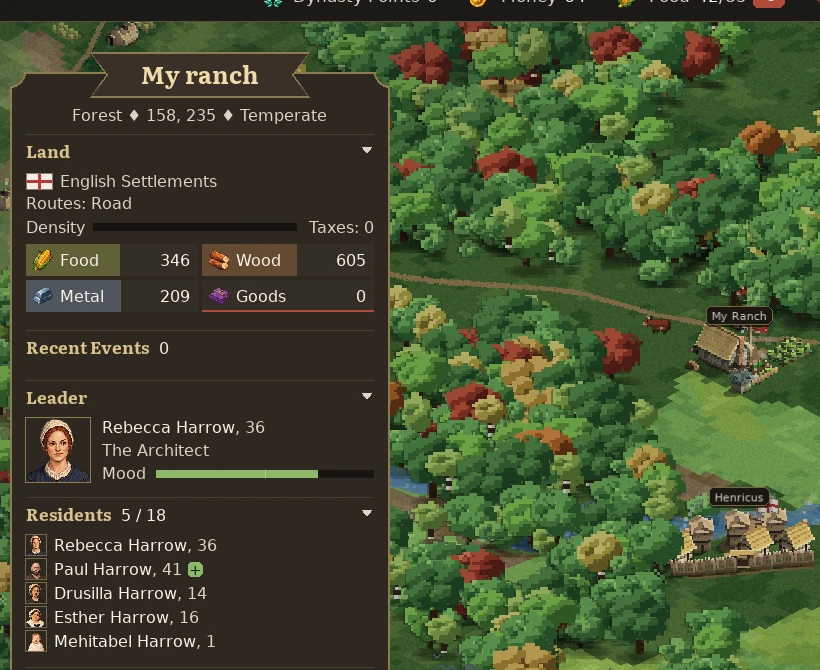
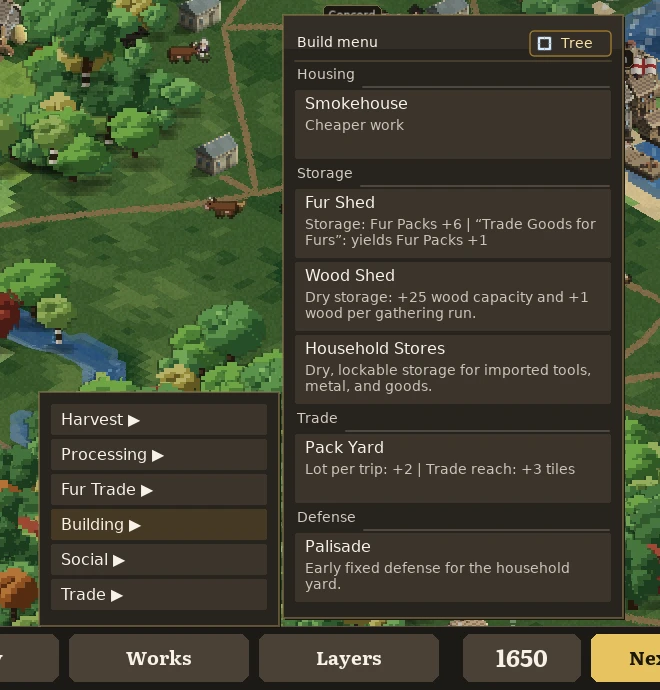
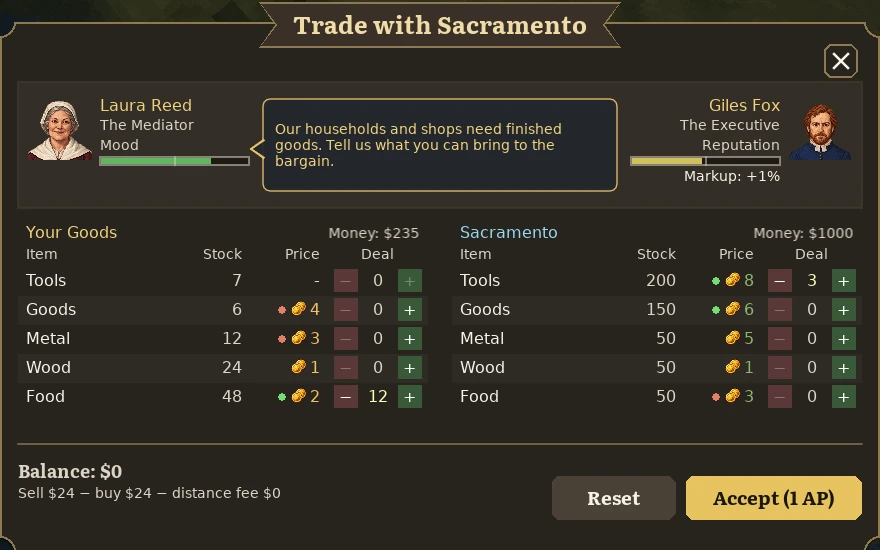
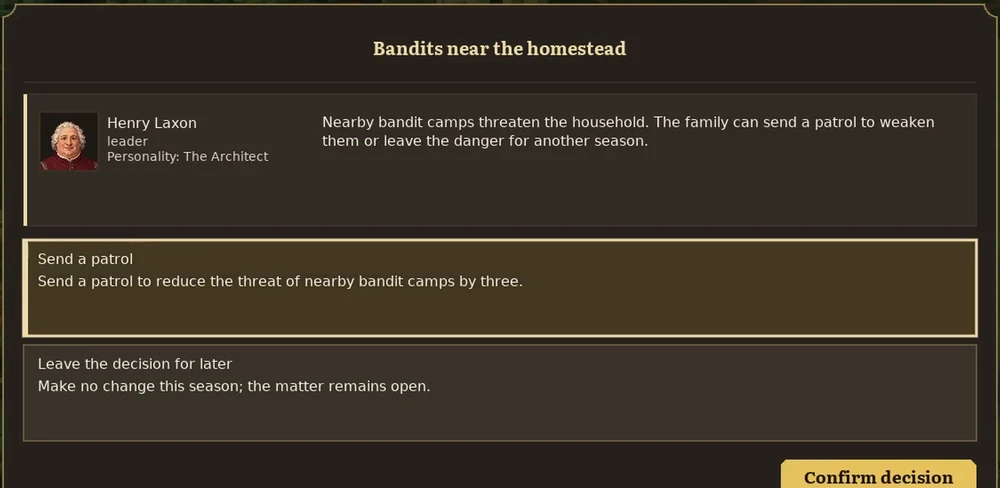
Salt and Soil: A Frontier Family Sim is a single-player, turn-based colony sim about one family on the American frontier from 1607 to 1900. Each turn is a year: you put the household to work, develop the homestead and trade, then the family meets in a Family Council to decide how to meet what the year brought.
When does it come out?
Salt and Soil enters Steam Early Access on November 9, 2026. The full campaign from 1607 to 1900 is playable. Version 1.0 is planned for the first half of 2027.
What’s in Early Access?
The campaign from 1607 to 1900 with four scenarios: Jamestown (from 1607), Pittsburgh (from 1775), San Antonio (from 1836) and Sacramento (from 1849); the homestead, family, succession between generations, trade, neighbors and historical events on a map of North America; ten languages. Characters, homestead businesses and the economy are simpler than they will be in 1.0.
Is there a demo?
A free Jamestown demo was available during Steam Next Fest in October 2026; 2,701 people played it. Check the Steam page for current availability.
Which platforms does it support?
Windows and macOS, on Steam. Steam Deck compatibility has not been reviewed by Valve yet.
Which languages are supported?
Interface and subtitles in English, French, German, Spanish (Spain), Simplified Chinese, Korean, Polish, Russian, Japanese and Portuguese (Brazil).
What are the system requirements?
Minimum on Windows: Windows 10/11 64-bit, Intel Core i3 or AMD equivalent, 4 GB RAM, Intel UHD Graphics 620, 1 GB of storage. Minimum on macOS: macOS 10.15 Catalina, Intel Core i5 or Apple M1/M2, 8 GB RAM, an Apple Silicon integrated GPU, 2 GB of storage. Both need a broadband internet connection.
Does it need an internet connection?
Yes. The Family Council is generated online, so Salt and Soil needs an internet connection; Steam lists a broadband connection in the system requirements.
Which Steam features does it support?
Steam Achievements, Steam Cloud saves and Family Sharing. You can save at any time, nothing runs on a timer, the game can be played with the mouse alone, and controllers are partly supported.
Is it historically accurate?
It is a game, not a textbook, but its history is checked. Railroads open on their real dates using economic historian Jeremy Atack’s database, used with permission. Jamestown Rediscovery archaeologists corrected the first chapter: about 300 colonists, not 500, went into the Starving Time winter of 1609–1610.
How is it different from a city builder?
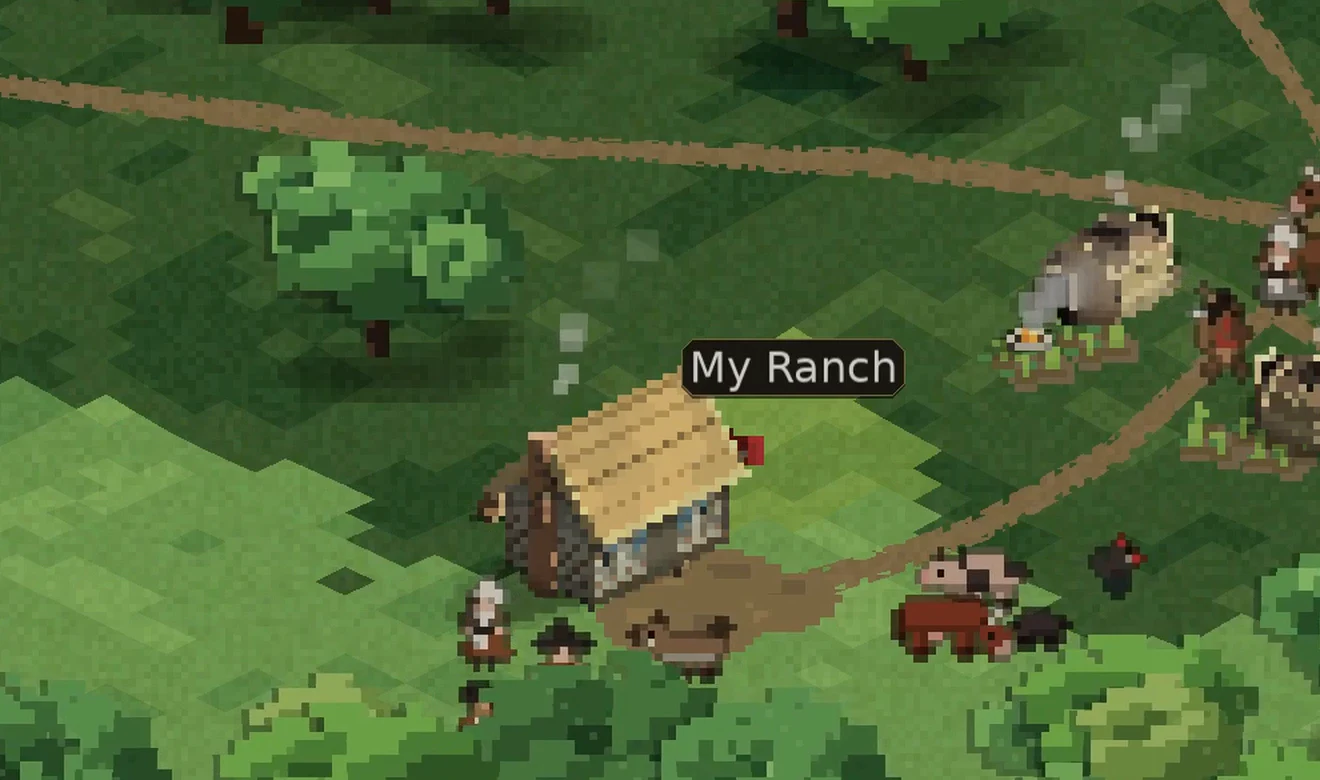
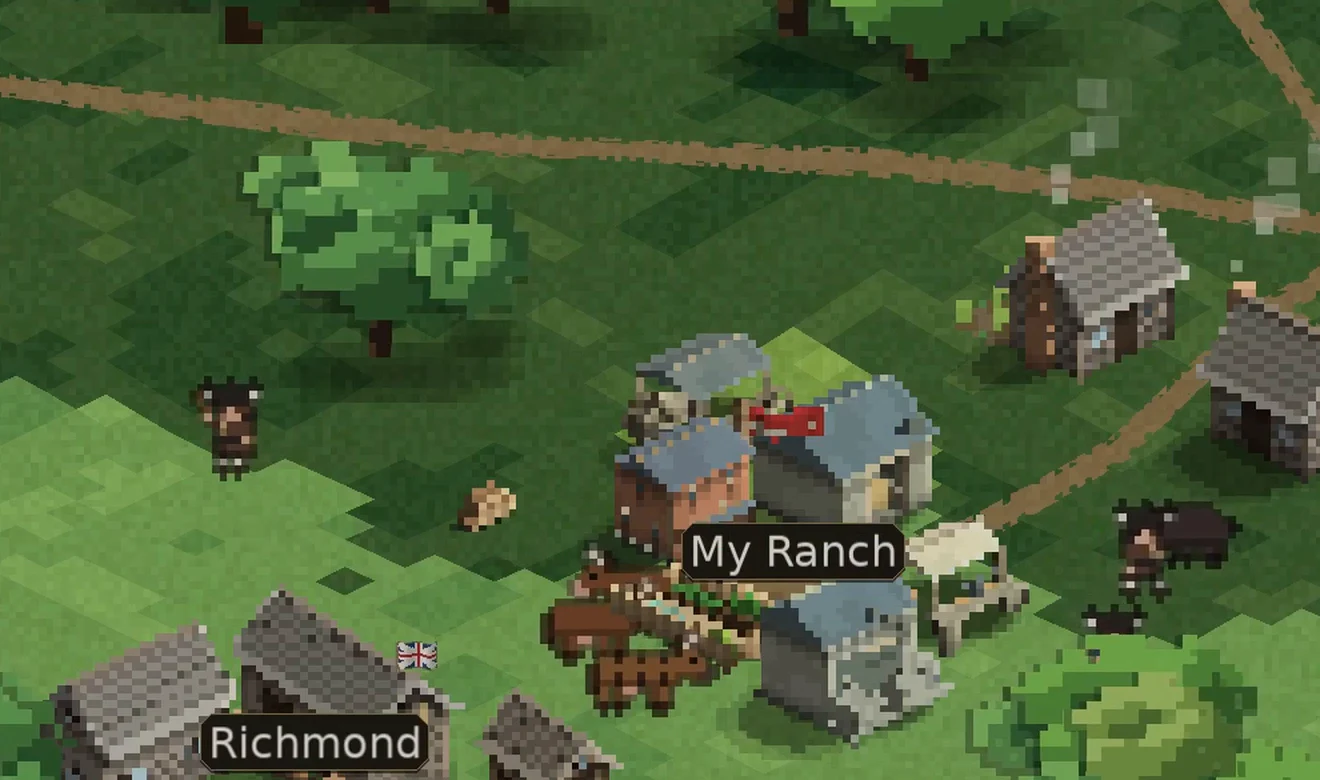
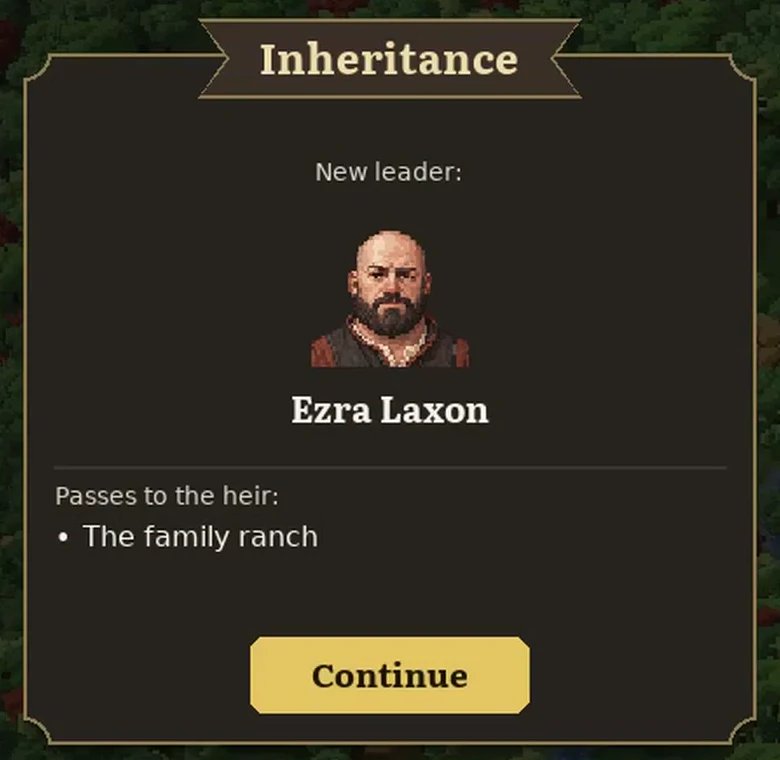
You manage one household, not a city. Every worker is a family member with a name, a personality and a lifespan. When the leader dies, an heir inherits the homestead and the campaign continues with the next generation.
How does it use generative AI?
Salt and Soil uses generative AI during gameplay to create some Annual Family Council narrative text and structured choice outcomes based on the current campaign state. Generated council content is constrained by the game’s historical setting, family data, localization rules and gameplay schema, then validated before it is shown. Council text is generated online through the third-party service Cerebras. In production, an AI pixel-art tool generated a significant share of the sprite work, which the developer curated and approved asset by asset; coding assistants were used on the codebase under human review; languages beyond the hand-written English and Russian are machine-translated and reviewed.
Who makes it?
One person: Roman, a solo developer and history enthusiast at the studio DelosX. He writes the code, the authored councils and the music, and sends every historical chapter to people who know more than he does.